

Between Times-
Chapter Six - part three...

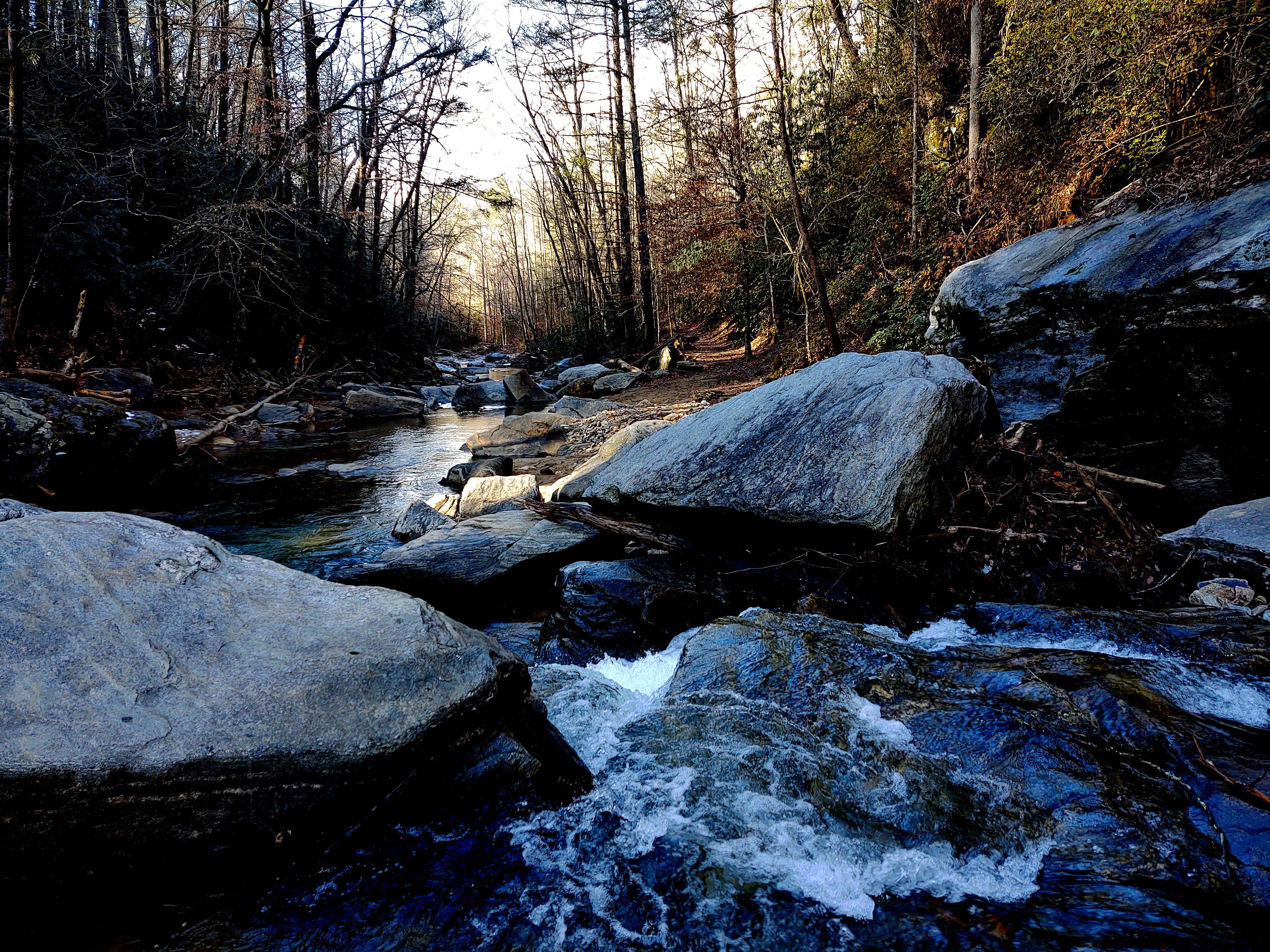
BETWEEN TIMES - Chapter Six, Part Three- some water music…
To begin at the Beginning, Click here.
Barnabas Andrew Ronan Darner pulled his skiff ashore near the mouth of Sorrow Creek and set to work in Annie Starling’s garden, weeding her corn rows. Small for a human male, Ronan looked younger than he was. His unwieldy name remembranced his father’s three brothers. After an hour he was done. He pulled off his muddy shirt and trousers and put on some clean ones that he’d wrapped together with a light blanket, a tin of matches and his two books in his waterproof poncho. He washed out his gardening duds at the river’s edge and hung them on a line stretched between two sycamore trees. He dropped his hat on top of the matches, wrapped them carefully in the poncho in case of a shower, and set the package on the seat of his skiff. Then, with his books under his arm he headed up the hill past the garden for another two hours with Annie studying math and grammar, two subjects he was not especially inclined toward, although he was a great reader and a good history student, being fond of tales of any sort that managed to contain a surprise for the reader.
He raised his fist to knock on Annie’s door when she opened it, having seen him from her kitchen window, “Come in, Ronan, and sit thee down. I’ll give thee a bit of bread and honey and some mint tea before we turn to books, and thee can tell me about thy week.”
Ronan’s week had been fairly satisfactory, he thought. He’d managed to get through school without getting into any noteworthy trouble, which he had a talent for. He made a feed trough for the family’s milk cow, and his father, who was generally stingy with praise, said it was good. Ronan’s ambition was to become a carpenter, maybe even make real furniture. When Annie told James Coggins about her student’s gifted hands, James said if Ronan could get his father’s permission, he could work with his crew as a part-time helper and begin to learn the trade. Ronan’s father, Steve said he should take James up on it if he wanted to be a carpenter, because James Coggins was maybe the best builder in Carolina. James built houses for rich people who wanted to spend their summers in the mountains. He’d learned working wood from his father Houston, who Steve said could turn a tree into a rocking chair with not much more than a bow saw and a froe.
When Ronan thought he had about as much math and grammar as he could carry with him, he thanked Annie for her tutoring, and promised to come back in a few days and stake her tomatoes. It was already dark and fog rolled up from the river as he came out her door. Ronan hurried down past the garden, pausing to get his clothes from the line, was surprised to find them still wet, then saw that, although they were about the same size and similar material, they weren’t the shirt and trousers he’d left. He looked toward the water and was surprised again.
Annie still sat on her steps watching the fireflies when she saw Ronan walking through her yard with his books under his arm going back up toward the road, “Ronan, did thee not come down the river today?”
“I did so, Miss Annie, but I reckon I’m walking back home. Somebody took papa’s skiff.”
#
It was nearly midnight when Drum got Kent Rockwell home and handed him over to his wife, and Drum was too tired to fancy drinking with a strange woman in a pub, however compelling she might be. He went back to his hotel, packed up his exposed film from the day’s shooting, and got ready for bed.
Drum doubted Liza Charon’s invitation was meant seriously, in any case. He had just provided her with a handy excuse to needle her friend Kent. She obviously enjoyed deflating male egos. Drum thought it might be fun to risk being her target when he wasn’t so tired. He lay on his bed, opened a volume of Yeats he’d found in his room, fell asleep in the middle of the second page, woke about two in the morning with the light in his eyes, set his book on the table, turned out the lamp and was asleep again before he took three breaths.
Below him, the river flowed and flickered like a ghost under the moon. He could hear dark wind whispering to water, and hear the water’s sibilant answer. He fell slowly toward the river, waves and ripples on its surface drawing up moonfire from the depths. A dark shape on the water gradually expanded, became a boat. Sitting in the boat, a woman with hair black as the night, but like the water, shot through with moonsilver. Her green dress in the moonlight looked almost as dark as her hair. Drum was seated in the boat with her and she fixed her deep shadowy eyes on him and lifted her fiddle from her lap and began to play. They weren’t in the boat any more but in a dark room where she stood in front of a large hearth where a fire burned and flared as she played. The flames soared and danced to the music, and the music was in his head and he was trying to remember who the fiddler was.
“Are you Liza?” Drum asked, not certain if he spoke aloud or only thought the question.
Without pausing in her playing, the green fiddler laughed, then began to sing.
Liza is me
and I am Li
Wasam Willbe
has sent to thee.
She sang more but Drum did not hear it. He was suddenly wide awake and wondering why he was afraid. He got up then, dressed, and took a walk through deserted streets, thinking about Horace Kellett and Walt Coggins and Mura and Annie and Emmalou Truelight and the little girl he picked up from the pavement after the bomb exploded on Wall Street. When the sky finally began to brighten, he went back to the hotel to find his breakfast, a scrap of a fiddle tune running through his mind.
#
Horace opened his eyes with an effort; his lids were as heavy on his face as wet leaves. He was too tired to turn his head, but he could see a curtainless window past the foot of his bed, sunlight streaming in. His chest hurt. He took a breath, gathered himself before he took another. His ribs felt broken. The green woman flowed into his field of vision the way a vine grows into the light. He knew without asking that she was the fiddler whose music he had heard before he fell into the creek and darkness. But where was he now, and how had she brought him here? Horace thought the question without strength to voice it.
She smiled, “I had help. Now rest.”
Horace didn’t know if she had guessed his query or read his mind, but before he could wonder about it he was taken in again by deep and dreamless sleep.
Light returned. When Horace managed to focus his vision, an exceedingly narrow face peered down at him over a frayed flannel shirt and a pair of faded overalls. When he saw Horace was awake, the thin man cackled in delight, “Well look at you, and who has she brought us now?”
Where was the Green Woman? Horace saw her like the Fiddler in Walt Coggins’ tales. She had fiddled him into the world again the way Li fiddled the creatures into the mountain. He tried to ask the thin man where she had gone. All he could get out was her name, “Li?”
The thin man misunderstood. “Well, Mr. Lee, Welcome to the Laurel. A good dose of this stuff will bring you to yourself in a rush.”
Thin Man put a hand under Horace’s head and lifted it gently as he brought up what looked like a whiskey bottle with a sop stuck in the mouth. Horace glimpsed a greenish liquid inside and caught a pungent aroma from the sop.
“Open up and draw on this,” Thin Man commanded, turning up the bottle and grinning broadly as Horace took the sop between his lips and sucked greedily. It did not taste especially good, nor bad, merely peculiar, like pine oil and sorrel and mint and chives all mixed together with other tastes beyond his experience. It was wet and answered his raging thirst. It was soothing in his throat and warm in his belly and after a couple of swallows his ribs quit throbbing and he was sleepy again as the Thin Man faded to black.
#
Two days later Drum had more photographs documenting Kent Rockwell and his doings than would ever find a page in the magazine. He sent off all his film with Roland Alston who was writing the text for their article. Drum wanted to be off his leash here for a couple of days and capture some images of the tumbling green countryside for his own fulfillment.
Kent was right. Drum didn’t think of himself as an artist, creating stunning images that would impress people with his skill. As Mura had told him more than seldom, “The picture is not to convince the viewer you were there, but to convince them they are there.”
When Alston’s train pulled away from the station, Drum walked back to the pub, ordered shepherd’s pie and a pint of dark beer. He ate at the bar with only two other patrons, an old man nursing his ale alone, and a younger in a business suit intent on his newspaper. While the bartender wiped his glasses for the third time, lifting each one and holding it to the light as if it were a marvel before replacing it on the tray, Drum asked him if he knew where within walking distance he might get some good photographs of rocks and water.
The bartender, a red-haired man named Dogie, as well as Drum could make out, responded as if this were a request he heard every day, gave him directions to several places within two hours walk, then asked, “Are you the Yank Liza fancied the other night?”
Drum was surprised, and a bit flattered to hear he’d made any impression at all. “I talked to her briefly. We’d never met before.”
“She left you a note.” Dogie fished an envelope from behind the bar, handed it to Drum, then leaned on his elbows, grinning expectantly while Drum opened the envelope and read his note.
“She’s gone to London,” he informed Dogie.
“I reckon you’ll be off then yourself.”
“In a few days, on my way home. I’m going to get my pictures first.” And he did. Later, back in Washington, when he’d processed and printed his images, Drum thought they might be the best he’d ever done. Looking at them made him homesick for the Creek. He sat down and wrote Annie Starling a long letter, promised to come for a visit before fall.
To be continued-
Next week - the long way home.
Walk in hope-
-henry